

.jpg "Art Nouveau: Art Reimagined")

Art Nouveau is French for ‘New Art’. It was intended to be art for the people and an attempt to move away from traditional art forms that were often restrictive and exclusive. The Art and Crafts Movement, which began in England in the second part of the nineteenth century, is the progenitor of Art Nouveau.
The Art Nouveau movement began in the late nineteenth century and was coined by British textile designer, writer, and social activist William Morris, along with other collaborators within the Arts and Crafts movement.
It was born during a period of rapid industrialization. European modernity sprang out of the era of the Industrial Revolution, which was characterized by factory life and mass manufacturing. The movement included and stylized automation and industrialization even as it celebrated craftsmanship and creative genius.
The sentiment of Art Nouveau is the importance of seeing the beauty in all objects; art does not have to be lifeless painting hanging on a wall but can be functional and available for more than just the few.

It's characterized by the use of a long, sinuous, organic line and was employed most often in architecture, interior design, jewelry and glass design, posters, and illustrations. The goal was to create a harmonious environment where every element was part of a unified artistic vision.
Art Nouveau artists fought against the idea that fine art, painting, and sculpture should be considered superior to the decorative arts.
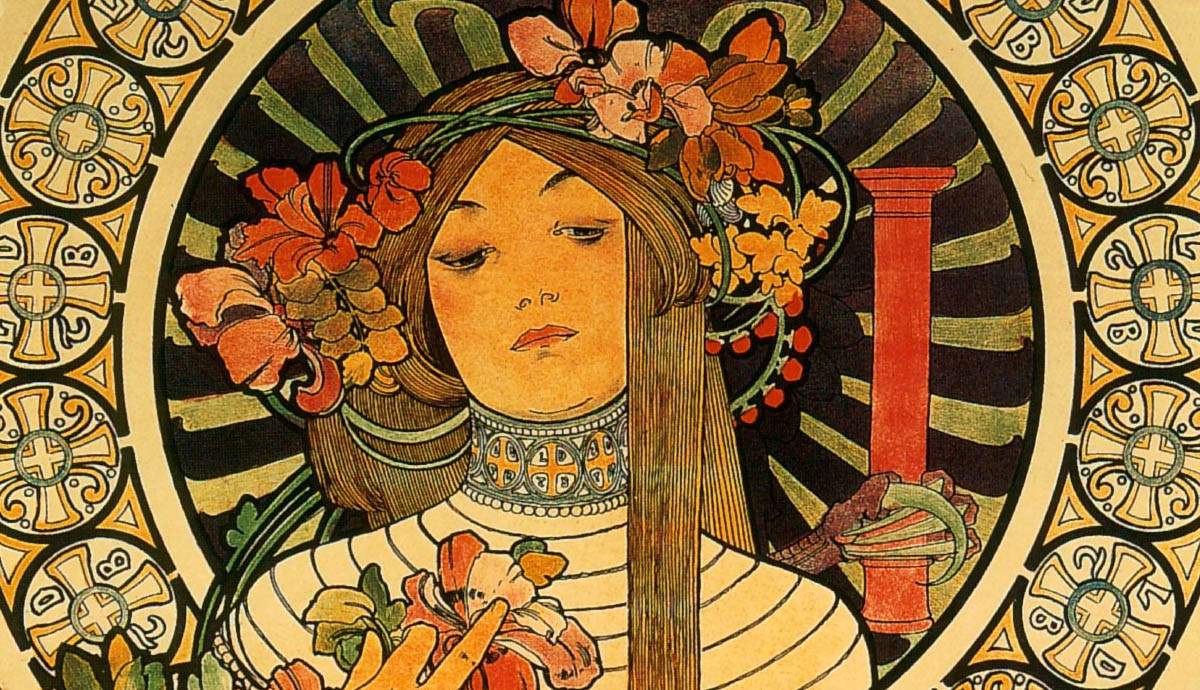
It bridged a critical gap between the aestheticism of the 19th century and the design of the 20th century. However, early in the 20th century, Art Nouveau started to decline almost as rapidly as it had started to spread throughout the Western aesthetic landscape. Ultimately, the movement’s reputation for the extravagance unintentionally fostered a gulf between rich clients and competent laborers.
Characteristics of Art Nouveau Style
- Sensuality
Art Nouveau captured the sexual reawakening that was taking place at the moment. Sexual overtones typically permeated Art Nouveau images of women in posters, paintings, and sculptures.
- Japanese Inspired Flat Perspective
Art Nouveau owes much of its influence on the introduction of Japanese Art to the West by German French art dealer Siegfried Bing. Eventually, Japanese art became increasingly well-known in Europe’s art circles.
- Stained Glass and Intricate Windowpanes
Numerous Art Nouveau structures also included stained glass or ornamental windowpanes. These windows often showed natural sceneries or abstract forms based on the contours of climbing plants and flowers.
- Floral
Art Nouveau depicts flowers and other natural forms using organic curves and asymmetry, as well as straight lines that bend gracefully and elegantly. Stems with gracefully intertwining flowing lines are transformed into tendrils.
- Undulating Asymmetrical Lines
Art Nouveau is easily identified by its signature undulating asymmetrical line, reminiscent of natural forms such as flower stalks and buds, vine tendrils, insect wings, and other flimsy, curved structures.
Art Nouveau stands as a testament to the transformative power of design and its ability to bridge the gap between the functional and the aesthetic. This movement revolutionized the perception of art, emphasizing that beauty and creativity should be accessible to all and permeate every aspect of daily life. From its sinuous lines to its floral motifs and Japanese-inspired perspectives, Art Nouveau reshaped architecture, interior design, and the decorative arts. Although its prominence waned in the early 20th century, the legacy of Art Nouveau continues to influence contemporary design, reminding us of the enduring value of harmonizing beauty with function.


