


Hindu Temple architecture is a form of the conventional style of architecture prominent in the Indian subcontinent since the Gupta period. Although innumerable changes have affected the architectural style since then and a lot of new ones have emerged as well, since the construction follows the architectural guidelines written in ancient Sanskrit manuscripts, the most prominent and distinguishing features of Hindu Temple Architecture have roughly remained the same.
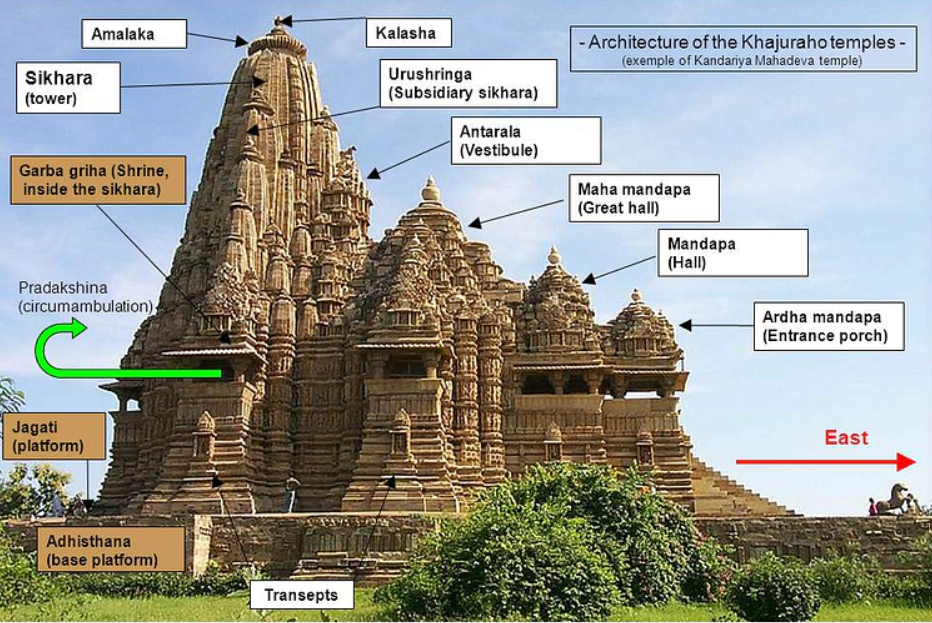
These features are:
Garbha-griha: Translated as womb chamber, this windowless shrine room houses the idol or symbol of a particular deity and is built in the center of the Temple structure.
Circumambulation path: As worshippers believe that sacred energy flows out from the womb chamber in eight directions, a Pradakshina or circumambulation path is built around the inner sanctum to allow the worshippers to revolve around the path as a ritual.
Mandapa: Mandapas and the ardha-mandapa began to be incorporated as a part of the temple structure by the 10th Century CE. It refers to a pillared hall and portico entrance respectively, both of which lead to the womb chamber from the front.
Sikhara: Sikhara was also incorporated as a part of the Temple structure by the 10th century and refers to a corbelled tower that is constructed right above the Garbha griha. It serves to make the structure easily noticeable while covering and protecting the inner chamber.
Dikpala: As the Hindu temple architecture is built based on the architectural principles of the ancient Sanskrit manuscripts such as the Vastu Shastra or the Shilpa Shastra, the temple structure is laid following the eight cardinal directions. In each of these directions, an image of a God might be engraved or represented in the form of a sculpture on the exterior. These Gods or the guardians of directions are known as Dikpala.
Adhisthana: Adhisthana refers to an elaborately carved raised platform upon which the entire Temple architecture is built.
Mountains: The Hindu temples are believed to be representations of sacred mountains such as Meru and Kailasa according to ancient architectural texts in Sanskrit. These temples, therefore, resemble a mountain from a bird’s eye view, especially with numerous towers propped up on the sides.


